

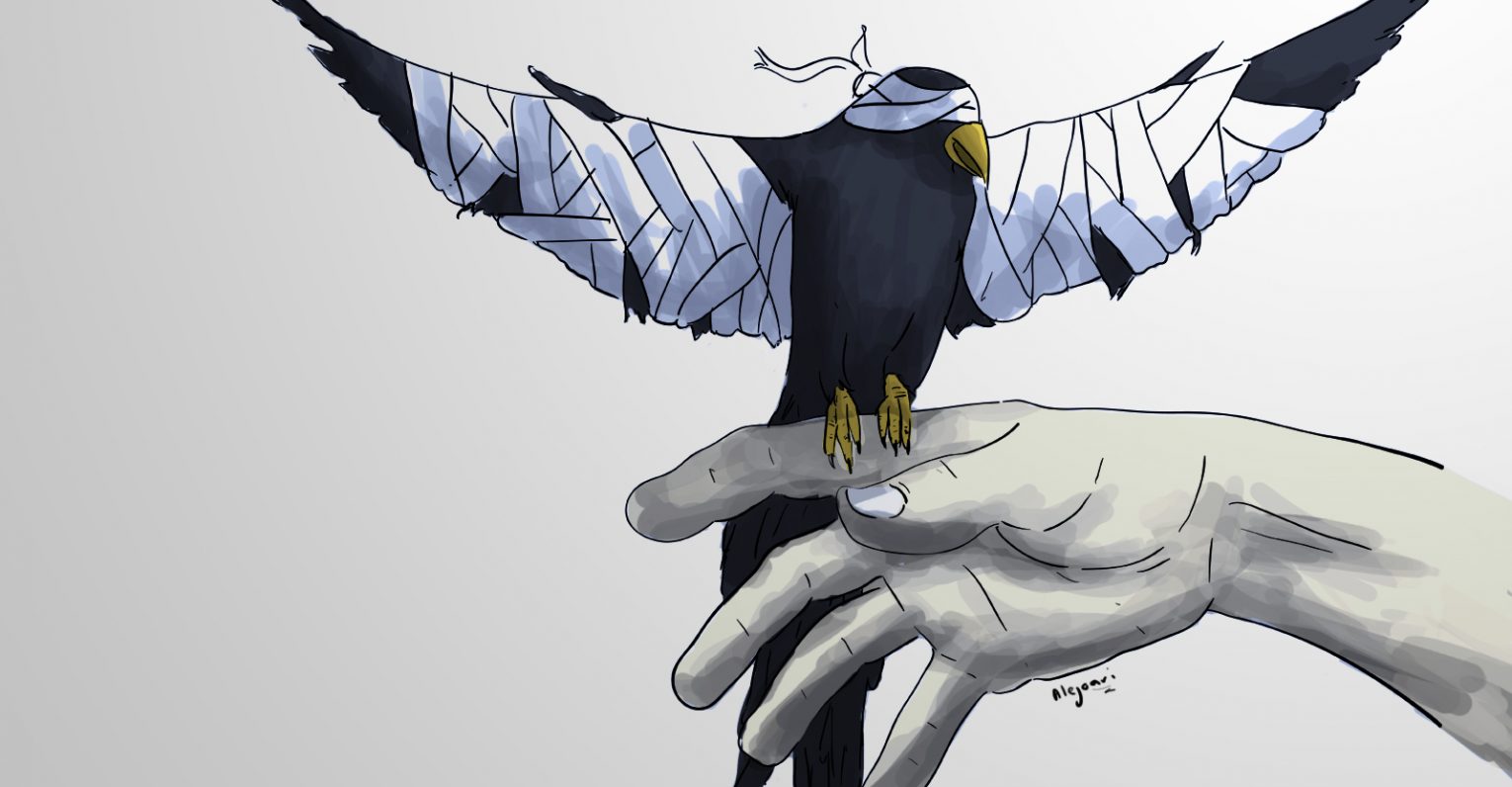
 Abstract: A Beatles song banned…and its lasting legacy…
It saddens me to admit that I can count on one hand the memories I have of my father; but every year, with the arrival of Human Rights Day, I smile and think of him. That may sound a little bizarre, but stay with me as I tell you a story.
My parents were divorced when I was young, and my father was absent during those early, formative years when I really needed a strong figure to guide me. Today, if I close my eyes and try to remember him, a handful of blurred, fleeting images appear of a man teaching me to tie my shoes and to play chess, a science textbook left on my bed for a birthday gift, and a tearful goodbye the day before my brother, mother and I left England for South Africa.
But there’s one clear memory I have of him, and it’s the one I treasure. It’s of the two of us listening to the Beatles’ White Album while he explained the significance of some of the songs. I remember thinking it strange that a deeply intellectual man who I knew loved classical music was speaking so passionately about a rock band.
It was only many years later that I learned why: the album was recorded during a period of intense emotional upheaval in the band. At the time of the album’s recording, The Beatles were effectively breaking up. Creative and personal differences were tearing them apart. Many of the songs were recorded without all four being involved, and for those where they were, they may not have been in the studio at the same time.
It was also a time when The Beatles felt unapologetically political, and a number of the songs on the album are strong social and political commentary presented through the medium of savage phrase and tender melody.
One song, in particular, stands out, my favourite: ‘Blackbird’. It was written by Paul McCartney after he read of the racial tension in the US following the federal courts forcing of schools in Arkansas to desegregate and open previously whites-only schools to black pupils. Martin Luther King had just been assassinated and the civil rights movement was afire.
The lyrics, seemingly innocent, even arboreal, are in fact a metaphor for encouraging the oppressed to rise up and take their rightful place: “Blackbird singing in the dead of night, take these broken wings and learn to fly, all your life, you were only waiting for this moment to arise”.
The song was inspired by events in the US, written in Scotland, recorded in London, and banned in South Africa.
That’s right – banned. The imagery of ‘Blackbird’ certainly wasn’t lost on the apartheid government, and the song simply wasn’t broadcast on the SABC. That was until I played it.
It was 1986 and I had just joined what was then Radio Port Natal. I was rummaging inside the music library when I stumbled across The Beatles’ White Album. I say ‘stumbled’ because it had been misfiled. Excitedly I grabbed it, booked it out, and rushed off to the studio to start my show.
Imagine my frustration when I discovered scribbled on the centre label next to the title of ‘Blackbird’, the command ‘Avoid!’
At that time, when records arrived at the SABC they were checked against a list of songs banned by the Government, and then handed to a team of staff whose sole job it was to listen to every track for further evidence of any offensive, sensitive or subversive lyrics. These could be swear words (rare in those days), references to religious figures or events, or anything that could in any way be considered revolutionary.
For example, Don McLean’s classic ‘American Pie’ was banned because of the line “And do you have faith in God above, if the Bible tells you so?”; and Stevie Wonder’s excellent ‘Master Blaster’ was not allowed to be played because of the line “Peace has come to Zimbabwe”.
Any song that had been banned or was considered unsuitable was clearly marked on the album cover and on the record’s centre label with the word ‘Avoid!’ If it was particularly offensive to the morals of the powers that be, the actual track was damaged to the point of making it unplayable – normally a series of deep scratches carved into the playing surface.
And to make sure no one disobeyed the rules, Big Brother was listening.
So it was that as I watched the word ‘Avoid!’ go round on round, and ‘Blackbird’ played through the studio speakers, the red light on the hotline in the studio started flashing angrily, demanding my immediate attention. Within minutes I was pulled off air and immediately suspended. It was one of my proudest moments in radio.
A generation later, walking past my office at home, I heard ‘Blackbird’ blasting through the closed door. Intrigued, I went inside and saw my son sitting at my desk. He was studying for his Matric exams, and, during one of his many breaks, had come across the song on my computer. His face was a mixture of surprise and amazement. “This”, he said, “has to be one of greatest songs I’ve ever heard”.
I smiled, sat next to him, and, like my father decades before, explained to a son the story of ‘Blackbird’, and the struggle for human rights.
Originally published in The Sunday Tribune, 25 March 2012