

 Abstract: You haven’t realised it, but things are getting louder. I said, “You haven’t realised it, but…!”, oh, never mind…
Imagine the scene…a romantic dinner with your spouse…no, wait; let’s make it sexy…a romantic dinner with your lover. The food is simply scrumptious and you’re both thrilled you chose a fine restaurant for your little tête-à-tête. The wine has a charismatic, zesty character, made all the more evident by the second bottle you’re half way through; but there’s something wrong…a horrible nagging, make that ‘irritating’, intrusion that’s spoiling the moment. It’s the shrill wail of Celine Dion coming from the speaker above you, and she’s just the wedge.
Many years ago, the radio station at which I was working employed a particularly dedicated senior technical manager. Every morning he’d come into the studio and ask if there were any problems, and most of the time there weren’t any because he’d been one step ahead of any issues.
However one morning he was alarmed when I told him that I had heard a slight change in the signal. It sounded ‘cleaner’ in some way. He was alarmed not so much because it was a problem, but because I had heard it. He explained that it was caused by main control switching the line that carried the signal to the transmitter from a copper cable to optic fibre, but that “the human ear shouldn’t notice any difference”. His explanation sticks in my mind because I remember wondering “well, why do it then?”
Intrigued, he performed a battery of tests on my hearing and said that I had the most sensitive hearing he had ever known in an individual; and then he said something I’ll never forget: “Boy, going shopping must be sheer hell for you – all that audio and visual noise.”
I was so excited. Until that point I couldn’t understand how people endured the cacophony that bombarded them whilst ambling around any shopping centre: the noise of people talking, the clacking of heels on highly polished floors, the music from the shops, the PA announcements, even the ping of the indoor lifts arriving. Now I realised it was only I who experienced it, and that for most people there was no “noise”.
So I kept quiet about it – if you excuse the pun – and avoided shopping centres like the plague.
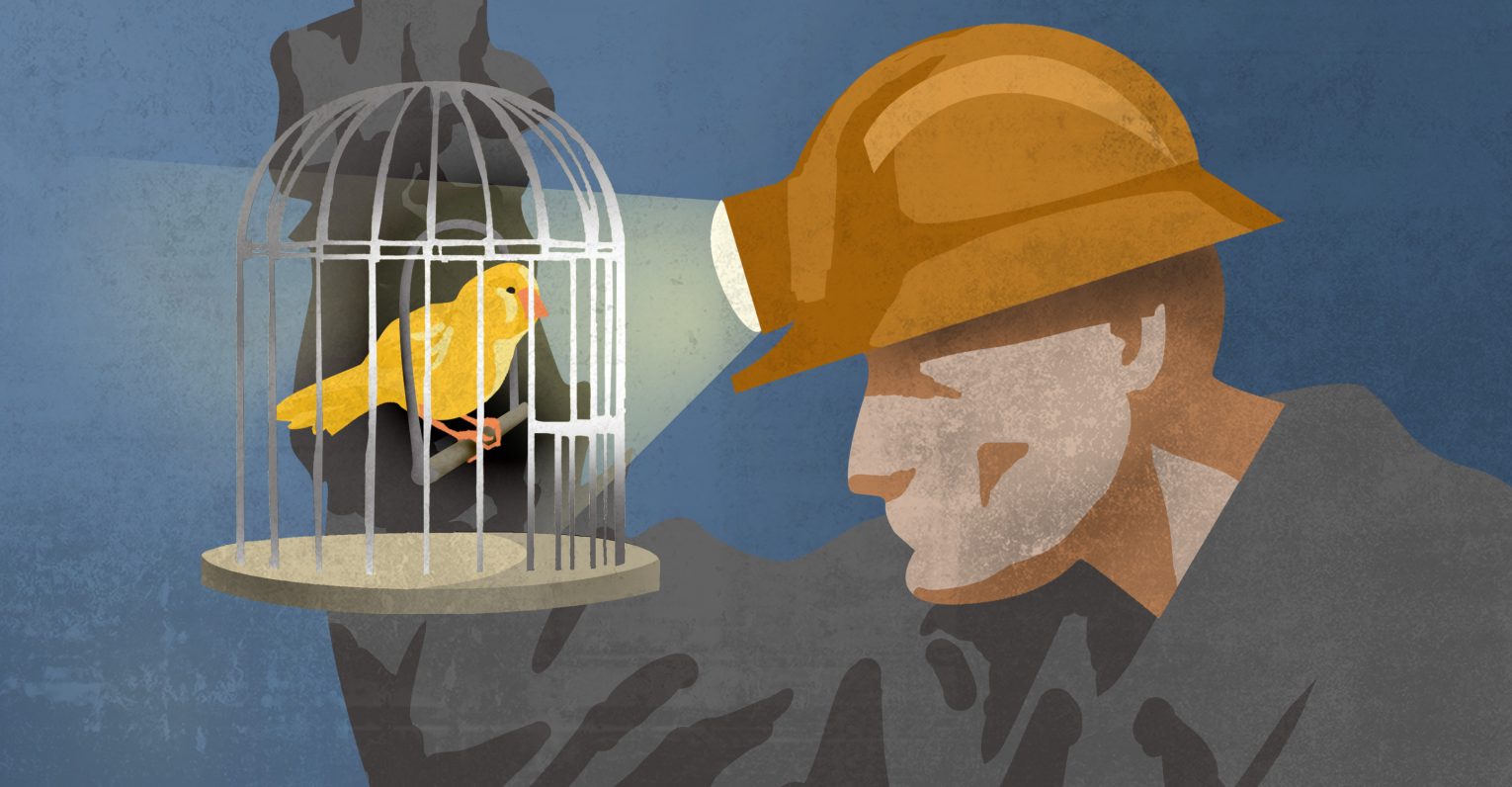
“So, Daryl,” you may ask, “why on earth should anyone be interested in your super-sensitive hearing?” A good question. The answer? Because I’m the canary in the coal mine.
Many years ago, in the early days of coal mining, mines weren’t ventilated, and the biggest danger to miners was not so much rock falls as the presence of gas, especially methane, which often occurs where there’s coal. Methane is colourless and odourless, which means unless there is a mechanism to detect it, you won’t know it’s there until you’re about to pass out.
In those early days of mining the science of methane detection was simply a canary in a cage; canaries are sensitive to the presence of methane, so when the canary stopped singing and keeled over, the miners would beat a hasty retreat.
I am that canary, and the insidious vapour of marketing is making me more than a little light-headed. So take notice.
You may not realise it, but in an economic world powered by marketing, advertising and spin, we are becoming increasingly exposed to a barrage of visual and audio imagery competing for our attention. Anywhere where people move, they become a target.
Bit by bit this imagery becomes vigorous, and more and more spaces, previously undisturbed, become launch pads for the next volley. Where there’s a space there’s a branding opportunity, whether it be the side of an escalator, the floor of an airport arrivals hall, or the open air next to the freeway; in fact anywhere where people are on the go. Or even pause. Think of the space above a urinal or the back of a toilet cubicle door.
Nowhere seems to offer any sanctity. Take your local bank, for example; previously a place of quiet contemplation and growing frustration. The chances are somewhere near the queue line there’s now a TV screen flashing promotional messages or mundane candid camera footage. The belief is that you’re standing there, not really wanting to be there, so if they take your mind off it by showing you clips of people dressed as chickens jumping out of bushes, your banking experience will be a happy one.
But they’re not alone. Restaurateurs, shop owners and people who manage public spaces believe that music and flashing images contribute to the ambience of the experience. In reality, it detracts from the experience. There is just so much that human beings can absorb when all their senses are being activated. But then sometimes that’s the idea: make up for a lack of quality of a presentation by adding bells and whistles.
If I want bells and whistles and flashing lights, I’ll go to a fairground. If I need to concentrate on something, whether it is ambling through a shopping centre, standing having a pee, or driving along the freeway, I need to focus on what I’m doing.
And if I’m sitting in a restaurant I want to focus on the food, the person sitting opposite me and what they’re saying, not Celine Dion wedging into my conscience, wailing again and again why her heart will go on. And if her singing doesn’t stop, mine soon will, and I’ll keel over with my legs in the air.
Don’t laugh – because you won’t be far behind.
Originally published in The Sunday Tribune, 20 May 2012