

 Abstract: Science explains why you should beware those who employ the wisdom of they.
You know what they say: a good man is hard to find. If you're nodding your head in agreement you're guilty of employing one the oldest tricks in the book of twisted logic, as well as a form of selective thinking popular with psychology. Don't feel bad, just about everyone does it.
Forget war correspondents; investigative journalists are the real hardcore purveyors of the so-called 'fourth estate', because, like Jack Russells on acid, they'll dig and dig until their paws are bloody and the evidence of their digging is piled proudly next to them. They believe in following the trail to find the original source of a claim, because that is where you'll find not only true accountability but also the real nub of a story.
Science journalists have to be investigative
Abstract: Science explains why you should beware those who employ the wisdom of they.
You know what they say: a good man is hard to find. If you're nodding your head in agreement you're guilty of employing one the oldest tricks in the book of twisted logic, as well as a form of selective thinking popular with psychology. Don't feel bad, just about everyone does it.
Forget war correspondents; investigative journalists are the real hardcore purveyors of the so-called 'fourth estate', because, like Jack Russells on acid, they'll dig and dig until their paws are bloody and the evidence of their digging is piled proudly next to them. They believe in following the trail to find the original source of a claim, because that is where you'll find not only true accountability but also the real nub of a story.
Science journalists have to be investigative

You know what they say about what they say
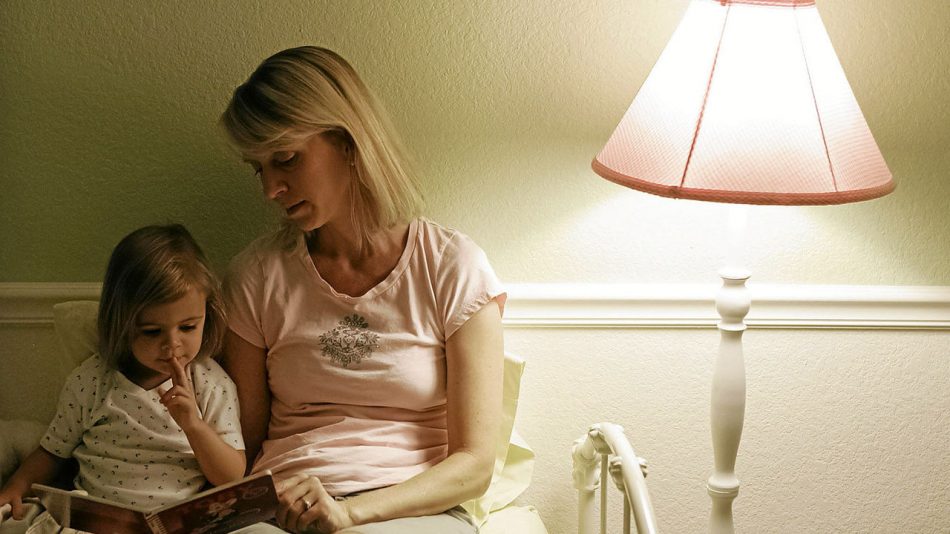
Light at night sets off alarm bells
 Abstract: A branch of science believes bedtime reading increases the risk of breast cancer...
For a parent, there are few things more rewarding than the excitement shown by a child when reading them a bedtime story; but there's a branch of science that fears that such a critical parenting role may increase a child's risk of developing the most common cancer found in South African women.
Such a summation may not seem out of place in the unfortunately imbalanced rhetoric of poor health reporting typically found in tabloids. You can imagine the headline: "Mother Goose causes cancer!" But the reality is that those conducting research in the discipline of chronobiology - a relatively new branch of science concerned with the internal biological clocks of various living organisms - are concerned that using artificial light at night poses a risk of developing breast cancer.
A
Abstract: A branch of science believes bedtime reading increases the risk of breast cancer...
For a parent, there are few things more rewarding than the excitement shown by a child when reading them a bedtime story; but there's a branch of science that fears that such a critical parenting role may increase a child's risk of developing the most common cancer found in South African women.
Such a summation may not seem out of place in the unfortunately imbalanced rhetoric of poor health reporting typically found in tabloids. You can imagine the headline: "Mother Goose causes cancer!" But the reality is that those conducting research in the discipline of chronobiology - a relatively new branch of science concerned with the internal biological clocks of various living organisms - are concerned that using artificial light at night poses a risk of developing breast cancer.
A

Where truth is a valuable commodity
 Abstract: There is big money in finding the liars out there.
Even a cursory glance at our daily newspapers would give credence to the opinion of the famous poet and essayist WH Auden that politics cannot be a science because "in politics, there is a distinction, unknown to science, between Truth and Justice." However, the race is on in science to design, manufacture and roll out what would be the greatest threat to politics as we know it: an accurate lie-detector.
With the completion of the Human Genome Project in 2003, it is neuroscience - the study of the brain and the nervous system - that has been dubbed 'the new genetics'. Like the world's oceans, the brain remains largely unexamined - something of a mystery - and this is why neuroscientists are busy trawling through reams of studies in an attempt to get
Abstract: There is big money in finding the liars out there.
Even a cursory glance at our daily newspapers would give credence to the opinion of the famous poet and essayist WH Auden that politics cannot be a science because "in politics, there is a distinction, unknown to science, between Truth and Justice." However, the race is on in science to design, manufacture and roll out what would be the greatest threat to politics as we know it: an accurate lie-detector.
With the completion of the Human Genome Project in 2003, it is neuroscience - the study of the brain and the nervous system - that has been dubbed 'the new genetics'. Like the world's oceans, the brain remains largely unexamined - something of a mystery - and this is why neuroscientists are busy trawling through reams of studies in an attempt to get

When the pickles say you’re getting old
Abstract: Science provides evidence when you are getting old - a jar of pickles.
There are several things no father wants to hear from his teenage children. There are those that are obvious because they're harbingers of serious emotional disruption: "Dad, I'm pregnant", "Dad, I think I crashed the car" and "Dad, I want to play for the Blue Bulls". Some, on the other hand, are less obvious, and invite only a little discomfort: "Dad, did you just buy a Carpenters CD?" and "Dad, what are those handcuffs doing next to mom's side of your bed?"
But there's one thing that you really don't want to hear from the lips of your teenage child, even though it is often said with the most profound love and deep respect.
The first time I heard it I was trying to open a jar of pickles. They were

Do not look into the light
Abstract: Neurology explains why near death experiences are not glimpses of heaven...
Near-death experiences have a terrible habit of sneaking up on you when you least expect them, and for that reason they can be quite bothersome. However what we should never do is see them as opportunities to have a sneak peek at heaven.
My such experience was, rather ignominiously, while I was perched upon the toilet. I was gathering my thoughts and thinking about the day ahead, when I was suddenly overcome by the sensation of a cold, wet cloak being thrown over my shoulders. At the same time everything seemed to go dark around me, and I found myself looking down a tunnel of light. I heard the voice of an angel calling my name.
I came round to find my wife helping me off the floor and nursing a rather cruddy

Is a successful business leader necessarily good?
Abstract: No, Steve jobs was not a good leader...
It was over fifteen years ago when I bought my first Apple computer. It was a blue iMac - a thing of surreal beauty. At a time of beige boxes and a jungle of cables, the simple translucent coloured curves that was my computer oozed a combination of sex and sophistication. OK, so maybe that's a bit overboard, but it does personify the unremitting, innovative leadership that helped create a highly successful company, but not necessarily one that was good.
I was a Mac addict back in the days when it was still a designer fix - the sole reserve of creatives who valued inspiration and innovation over pure operational functionality. My company at that time was creating experimental products that would later leapfrog over a competitor's more staid offering; and as such I worked

Everything gives you cancer…and also helps you live longer
Abstract: Why everything gives you cancer...and also helps you live longer...
There can be few things guaranteed to put off a potential reader of an article more than the headline 'Everything gives you cancer', especially in a Sunday newspaper magazine where they're looking for something light, relaxing and entertaining to read. So let me rise to the challenge; besides something tells me you already have a sneaking suspicion where this story is heading.
One of the biggest challenges for science journalists such as myself - those who dabble at the craggy interface of science and society - is that every time we write something we have to win over an audience who may not necessarily be interested in science. We have to do so by writing wonderfully engaging copy and surreptitiously slipping in a little science. It's like wrapping a pill in bacon so

The wretched imbalance of popular interest
Abstract: The tragic tale of two tweeters exposes the imbalance of popular interest...
For those interested in following someone else's thoughts, there is little to beat Twitter. Unfortunately it's dominated by the followers of so-called reality; when in fact the true stories are found in real life.
I am willing to bet all the money I have that the typical fan of Kim Kardashian has never heard of Tony Nicklinson. For those clever enough to shun reality TV, Kim Kardashian is the undisputed queen of this turgid genre of entertainment. She is a celebrity because she is on TV and she is on TV because she is a celebrity. She busies herself shopping, having her nails and hair done, and enduring the 'OMG' rigours of a celebrity lifestyle.
The good news is that evolution will eventually trim the human species of her ilk; the bad

A lesson in leadership from Douglas Adams
Abstract: The true power of a leader's voice lies in a lesson from science and space...
There's a pivotal saying in the world of journalism: content is king, context in King Kong. In brief it means that whereas what is said in a burst of text is important, its accuracy and correct interpretation - and therefore its impact - is ensured only if it is placed within the correct frame of reference. This same saying should be the preface of every handbook on sound leadership.
Like every other science journalist I whooped with joy and punched the air when the Mars Curiosity rover completed its treacherous voyage to the red planet and settled, on cue, into its predetermined landing area. It was the accumulation of years of commitment, insight and wisdom from hundreds of dedicated scientists and thinkers from all over the world. The

Fairer sex? Yeah, sure
Abstract: There is nothing fair about the so-called fairer sex...
Now that we're into the final week of Womens' Month, perhaps we can finally say goodbye to that phrase that has everything, and nothing, to do with women: the wholly inaccurate, grossly outdated and altogether condescending epithet: 'the fairer sex'.
I can imagine you've gathered by now that I find the phrase 'the fairer sex' more than a little jarring. Every time I hear it being used it has the effect of someone tapping me very firmly on my forehead. It's not hurtful, but it is highly irritating and completely out of place in polite social discourse.
Yet, it's somehow still hanging around, resolutely hooked into popular discussion; and it seems to be used, often a little too casually, to somehow encapsulate everything that is 'woman'. It worms its way into sentences such as, "We